
22 October 2026
How to Get Into Karting in the UK: Costs, Licences and Your First Race
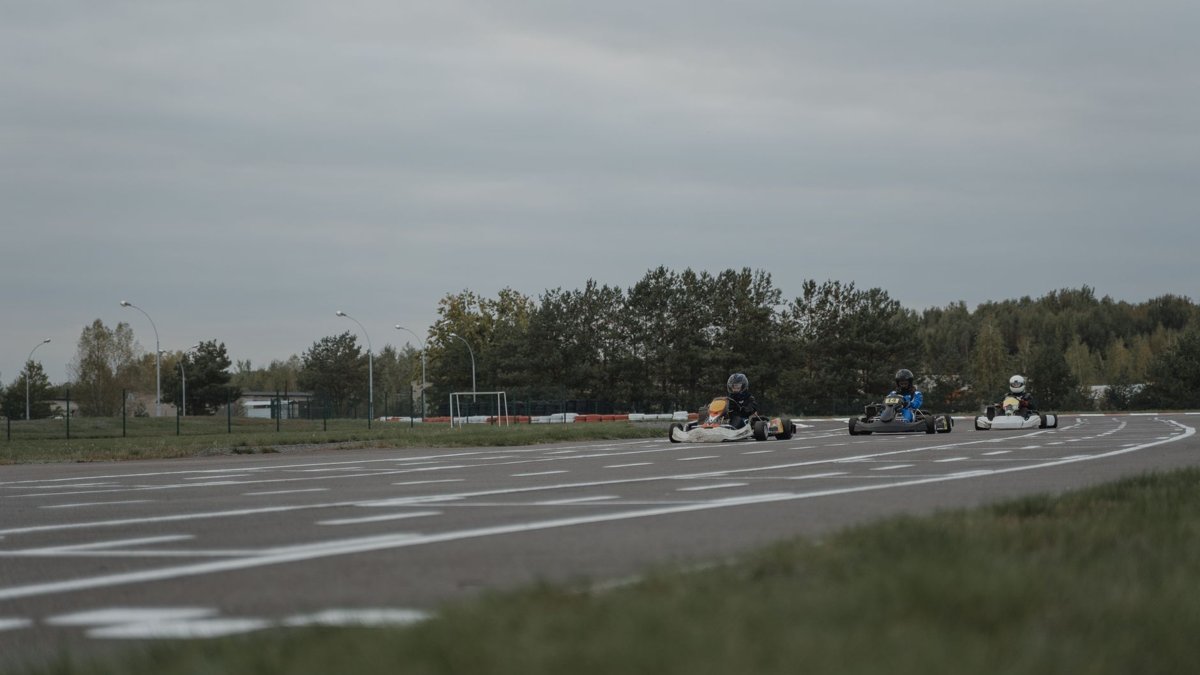
The quickest way to get into karting in the UK is to book an arrive-and-drive session at your local circuit, try it for an hour or two, and only then decide whether to buy a kart or join a club. You don't need a licence, your own kart, or any experience to start — most indoor and outdoor circuits hand you overalls, a helmet and a kart on the day, and you're driving within fifteen minutes. From there, the path splits into two very different directions: having fun on hire karts, or stepping up to owner-driver club racing with an ARKS test and an MSUK licence. This guide walks through both, with the real costs and the order to do things in.
Step 1: Try arrive-and-drive before you spend a penny more
Arrive-and-drive (also called "rental" or "hire" karting) is how almost everyone starts. You turn up, pay a per-session fee, and drive a circuit-owned kart. There are two main flavours:
- Indoor karting — petrol or electric karts on tight, floodlit tracks, open year-round regardless of weather. Typical top speeds of 40–60 km/h feel much faster an inch off the floor.
- Outdoor karting — longer circuits, faster karts (often 200cc Honda-engined rentals) and a proper taste of what racing on a real track feels like.
A single open session usually runs from around £25 to £50 depending on length and venue. Group "grand prix" formats — qualifying, heats and a final — cost more but give you the first real feel of wheel-to-wheel racing. You'll need flat, closed shoes and clothes you don't mind getting a bit of tyre rubber on; everything else is provided.
If you only ever do arrive-and-drive, that's completely valid. Plenty of people race in rental leagues for years and never buy a kart. There's no gatekeeping here — do the version of karting you enjoy.
Step 2: Join an arrive-and-drive league to learn racecraft cheaply
Most decent circuits run weekly or monthly rental leagues. For a modest entry fee per round you get qualifying and races against the same group of drivers, with a championship running over a season. This is the single best-value way to learn racecraft — overtaking, defending, managing a race distance and keeping your cool — without owning anything.
Leagues also tell you honestly whether you want to go further. If you're consistently near the front and itching for more speed, that's your cue to look at owner-driver karting. If you're having a brilliant time mid-pack and don't fancy the expense, you've already found your sweet spot.
Step 3: Decide between rental and owning your own kart
Owning a kart opens up club racing proper, but it's a genuine step up in cost and commitment. Here's the honest comparison:
| Factor | Arrive-and-drive | Owner-driver club racing |
|---|---|---|
| Up-front cost | £0 — just session fees | Kart, engine, trailer, kit (see below) |
| Licence needed | None | MSUK competition licence + ARKS test |
| Kit | Provided | Own helmet, suit, gloves, boots, rib protector |
| Maintenance | None | You (or a mechanic) prep the kart |
| Speed & competition | Moderate | Much faster, nationally structured |
A ballpark for getting into owner-driver racing on a budget: a used club-class chassis and engine can be found from around £1,500–£3,000, with safety kit adding roughly £400–£700 for a decent new helmet, suit, gloves, boots and rib protector. New competitive equipment runs far higher. Add a way to transport it — a van, trailer or even a roof-rack setup for some classes — plus consumables like tyres and fuel each meeting. Budget realistically before you commit.
How to get a karting licence in the UK
Owner-driver club racing is run under Motorsport UK (MSUK), the national governing body. To race you need a competition licence, and to get your first one you take the ARKS test (Association of Racing Kart Schools). The process looks like this:
- Buy a "Go Karting" starter pack from Motorsport UK, which includes the licence application and the official guide.
- Study the guide — flags, rules, safety and race procedures.
- Book an ARKS test at an approved school. It combines a written/theory element with an on-track assessment of your driving and understanding of the flags.
- Pass, get your test signed off, and submit your licence application.
Expect to budget a few hundred pounds across the starter pack, the ARKS test and the licence itself; exact fees change each year, so check Motorsport UK's current pricing before you book. If you're a complete beginner it's worth sitting the test at a school that also offers tuition, so you turn up prepared. For the car-side equivalent of this first-rung licence, our guide to the Clubman licence and what it costs explains how the MSUK licence ladder works more broadly.
Karting classes and age groups explained
UK karting is organised by age and engine class. Rough age bandings (always confirm current rules with MSUK and the class regs):
- Bambino — from around age 6, a safe introduction for the youngest drivers at approved venues.
- Cadet (IAME Cadet, Honda Cadet) — roughly 8 to 13, the classic junior starting point.
- Junior classes (e.g. Junior X30, Junior Rotax) — mid-teens.
- Senior classes (Senior X30, Senior Rotax, Rotax 177, KZ gearbox karts) — adults, with gearbox classes being the fastest and most demanding.
Adults getting into karting for the first time usually land in a senior four-stroke or two-stroke class, or a dedicated owner-driver club series. Many circuits also run relaxed "club" grids that are perfect for newcomers who want real racing without the national-championship intensity.
Where to find karting events and circuits near you
Once you know which direction you're heading, the next job is finding somewhere to do it. You can search karting fixtures, open practice days and club meetings alongside every other discipline on the MotorsportEventFinder calendar, or use the interactive event map to find circuits and events near you. Listings show dates and, where available, entry and booking details so you can plan ahead rather than ringing around.
If you fancy watching before you drive, karting is one of the most spectator-friendly forms of motorsport — close action, no grandstands needed, and you can often stand metres from the track. Browse every UK motorsport event to see what's on this month.
A sensible first-year plan
- Do three or four arrive-and-drive sessions at different circuits to find one you like.
- Enter a rental league for a season to build racecraft cheaply.
- If you're hooked, take the ARKS test and get your MSUK licence.
- Buy a good used kart in a beginner-friendly club class.
- Enter club meetings, learn to prep the kart, and step up only when you're ready.
That order keeps your early spending low and your learning high — which is exactly how to get into karting in the UK without an expensive false start.
Frequently asked questions
Do I need a licence to go karting in the UK?
No — for arrive-and-drive and rental leagues you need no licence at all. You only need a Motorsport UK competition licence (via the ARKS test) if you want to race your own kart in club or national owner-driver events.
How much does it cost to start karting?
Trying it costs about £25–£50 per arrive-and-drive session. Going owner-driver is a bigger jump: budget from roughly £1,500 upwards for a used kart and engine, plus £400–£700 for safety kit, plus licence and test fees. Prices vary, so check current figures with each venue and MSUK.
What age can you start karting?
Bambino classes start from around age 6 at approved venues, Cadet from about 8. Many arrive-and-drive circuits have their own minimum age (often around 8 for juniors and 16–18 for adult karts), so check with the specific circuit.
What do I need to bring to my first session?
Flat, closed-toe shoes and comfortable clothes. Helmets, overalls and gloves are provided for arrive-and-drive. Long hair should be tied back, and you may be asked to remove loose jewellery.
Looking for an event? Browse every UK motorsport event, see the calendar.